Product
The AI is not the product
Why extraction is only one step, and the surrounding workflow is where dependable business software gets built.
“It’s just an AI wrapper” is usually meant as an insult. I think it gives the model far too much credit.
While building NeevFlow, I learned that getting an AI model to read an invoice is the easy demonstration. You upload a document, a few seconds pass, and structured fields appear on the screen. It looks impressive. It is also only the beginning.
A business does not need a convincing demonstration. It needs the invoice to be processed correctly. Those are very different standards.
The model performs a task
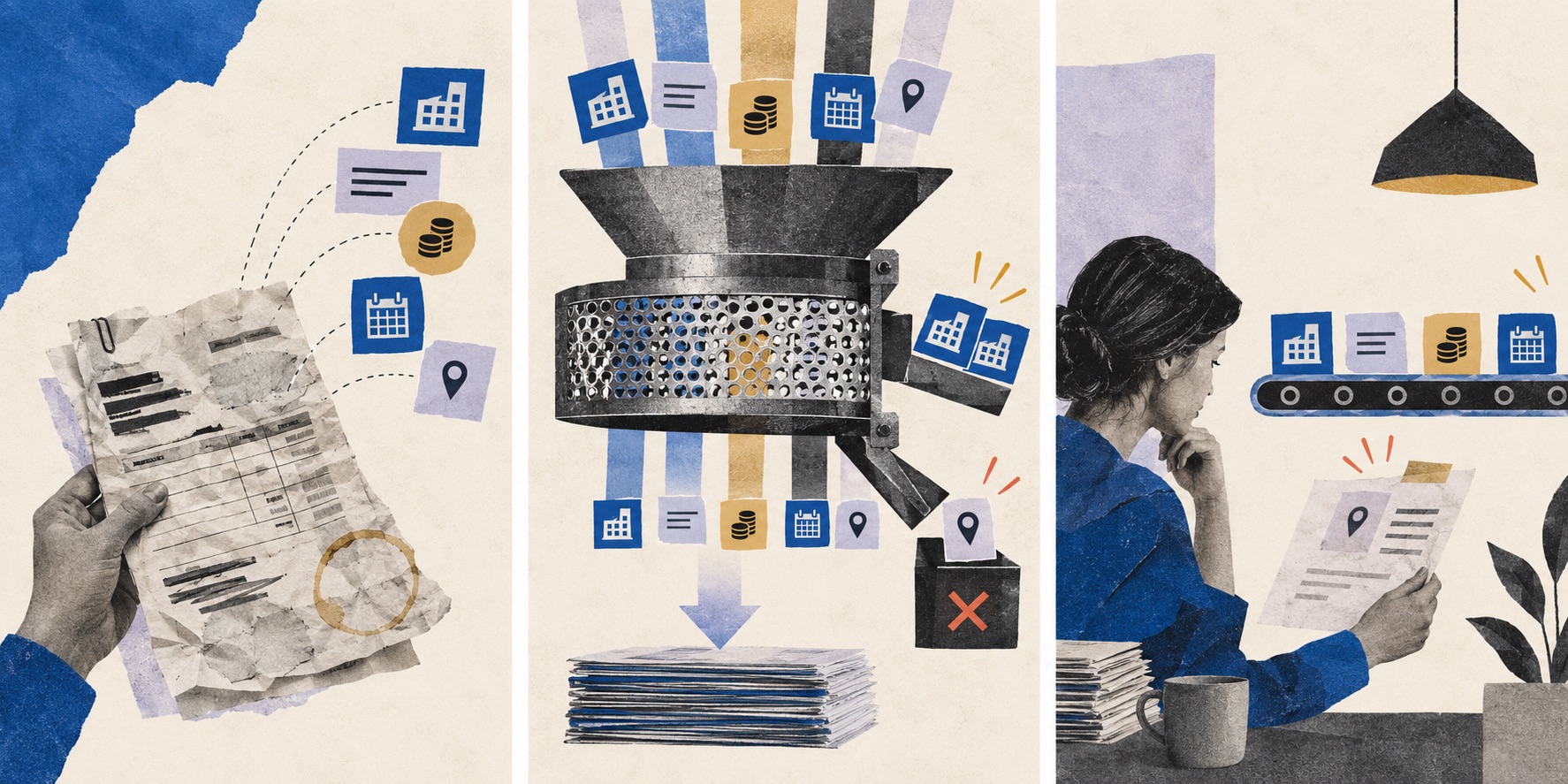
AI is good at turning messy input into a useful first interpretation. In invoice processing, that can mean identifying the supplier, invoice number, dates, currency, totals and line items. This removes tedious manual entry and gives the workflow somewhere useful to begin.
But extraction does not know everything the business knows. It does not automatically know whether the supplier is expected, whether the amount violates a policy, whether the same invoice arrived yesterday, or who is allowed to approve it.
It can confidently read a number while being confidently wrong about what that number means. Confidence, sadly, is not a refund policy.
The product carries the responsibility
The surrounding system has to turn an uncertain interpretation into a dependable business action. For NeevFlow, that means combining model output with deterministic controls.
- Required fields must be present and structurally valid.
- Calculated values should agree with the document totals.
- Potential duplicates need to be detected before they travel further.
- Exceptions must be visible, understandable and assigned to the right person.
- Every important action needs a trace that can be reviewed later.
None of this is glamorous in a short product video. It is, however, the part people rely on when the software meets real money, real deadlines and real colleagues asking what happened.
Deterministic where it matters
I do not believe every decision should be delegated to a model. Some questions benefit from interpretation. Others need an unambiguous rule.
“What is the likely invoice number?” is a reasonable model task. “Has this exact invoice already been accepted for this organisation?” should not depend on a creative mood. The system should check the relevant facts and return the same answer every time.
The useful design question is not “Where can we add AI?” It is “Which parts require interpretation, which require certainty, and how do they work together?”
Human review is a feature, not a failure
Many automation products describe human involvement as something to eliminate. I see it differently. A good system should remove routine work and make the remaining judgment easier.
When the software is uncertain, it should say so. When a value breaks a rule, it should show the reason. When someone corrects a field, the system should keep the correction and continue without turning the process into an archaeological dig.
The objective is not “zero humans.” The objective is that humans spend their time on the cases where their context matters.
The model should be replaceable
Models will continue to improve. Prices, speed and capabilities will change. A product that treats one model as its entire identity becomes fragile very quickly.
I want the extraction capability to be replaceable without redesigning the whole workflow. The validation, permissions, review experience, integrations and audit history should remain valuable even when the underlying model changes.
Customers do not care which model won a benchmark this week. They care whether the invoice was processed correctly and whether they can understand what the system did. Fair enough. They have work to do.
The wrapper is where the product lives
So yes, NeevFlow wraps AI capabilities. It also wraps them in business rules, state, permissions, exception handling, human judgment and accountability. That wrapper is not an embarrassing layer around the “real” technology. It is the part that makes the technology useful.
The model can read the invoice. The product must help a business finish the job. That is a much less magical sentence, and a much more demanding one.